The next thing I learned is that personas might be lying to us.
You know the ones. “Meet Jess. 28. Bartender. Lives with two roommates. Loves oat milk. Struggles with money. Has a cat named Biscuit.” Jess is on every whiteboard in every design studio, and Jess does not exist.
Chiara Lino and Giulia Bazoli from Designit call personas “static and unrealistic descriptions of non-existing individuals.” That’s the polite version. Here’s mine: personas are fan fiction about your users.
Their critique goes deeper than “Jess is fake.” Every detail you add, like a name, an age, or a stock photo, quietly brings in assumptions about class, gender, and lifestyle. Whatever you don’t know, you fill in with yourself. Then the persona gets laminated, reused across five projects, and suddenly the whole company feels user-centred because there’s a poster of Jess in the break room.
So what do they suggest instead? Mindsets: not who someone is, but how they’re relating to a situation right now. Are they nervous? Confident? Cautious? What builds their trust, and what breaks it? The people who actually use these tools, from product owners to developers to designers, never needed a face or a backstory. They needed to know what triggers a decision.
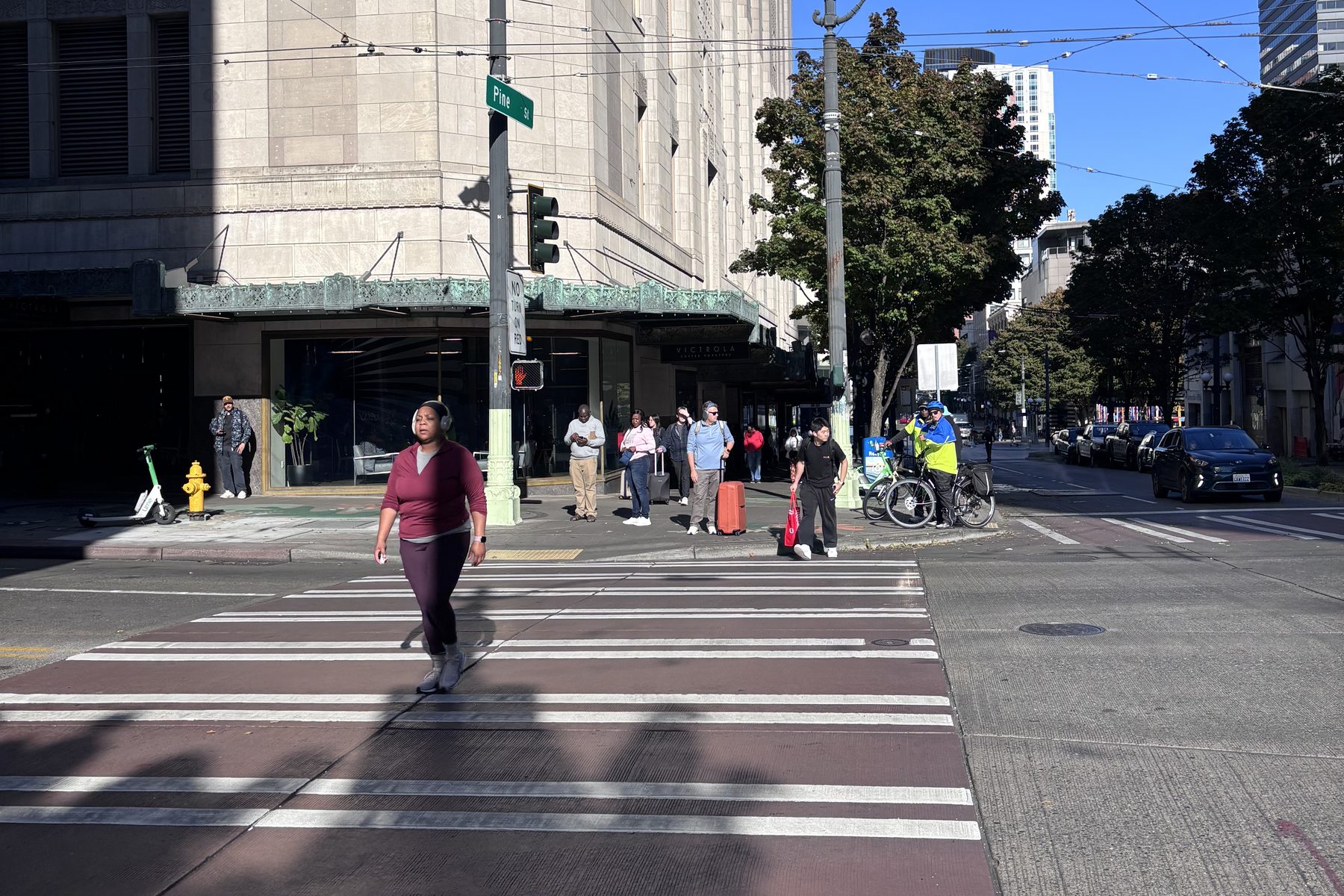
I didn’t fully get it until I looked back at my own crosswalk photos.
Same corner, 3rd and Pine, same day. In the first scene, the red hand is lit, and people are crossing anyway, following whoever moves first:
A little later, the WALK signal is on, and twelve people refuse to move:
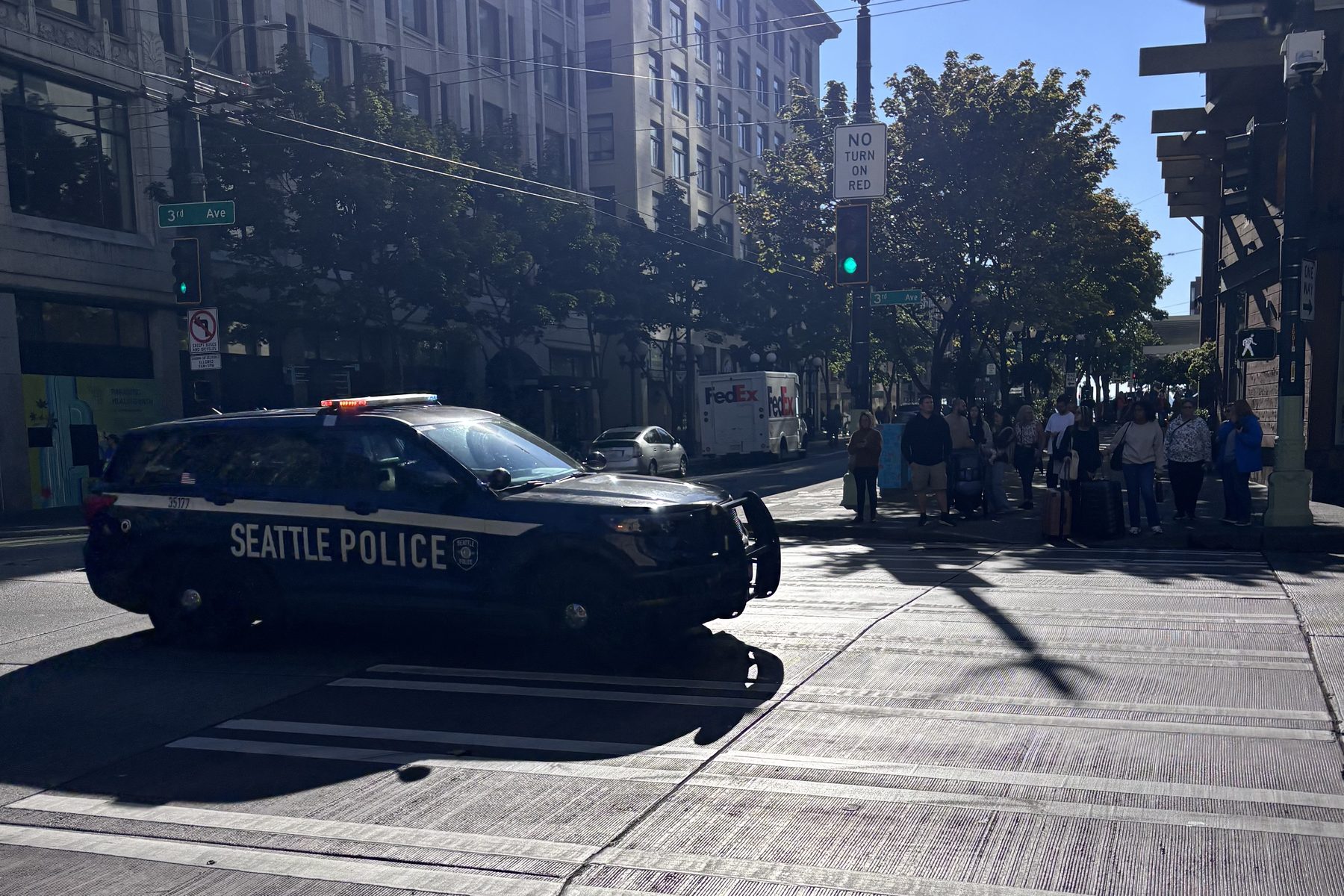
Why? A police car with its siren on was rolling through the intersection. The signal said go, the siren said absolutely not, and everyone listened to the siren. Not one person stepped off the curb.
Now try explaining both scenes with a persona. “Seattle Pedestrian, 30, impatient, crosses on red.” Great, except that same impatient person is now standing politely at a green light. The persona breaks immediately.
Mindsets don’t break. At the red light, people were uncertain: the risk was hard to judge alone, so they copied someone. With the police car, the urgency was obvious: everyone could see and hear why waiting made sense, so they deferred. Different behaviour, not because they’re different people, but because the situation put them in a different headspace.
The people with rolling suitcases? They didn’t need a backstory either. Their mindset was simply: “I have 23 kg of luggage and zero intention of sprinting.”
That’s the shift for me. A persona tells you who to imagine. A mindset tells you what moment to design for. Users aren’t one person; they move between mindsets depending on what’s happening around them, and good design meets them in whichever one they’re in.
So, sorry Jess. You were a great placeholder. But I’d rather design for the moment someone hesitates at the curb than for a bartender who loves oat milk.
(Biscuit can stay. Biscuit did nothing wrong.)